Moog Spectravox | Utilizing the Spectral Shift
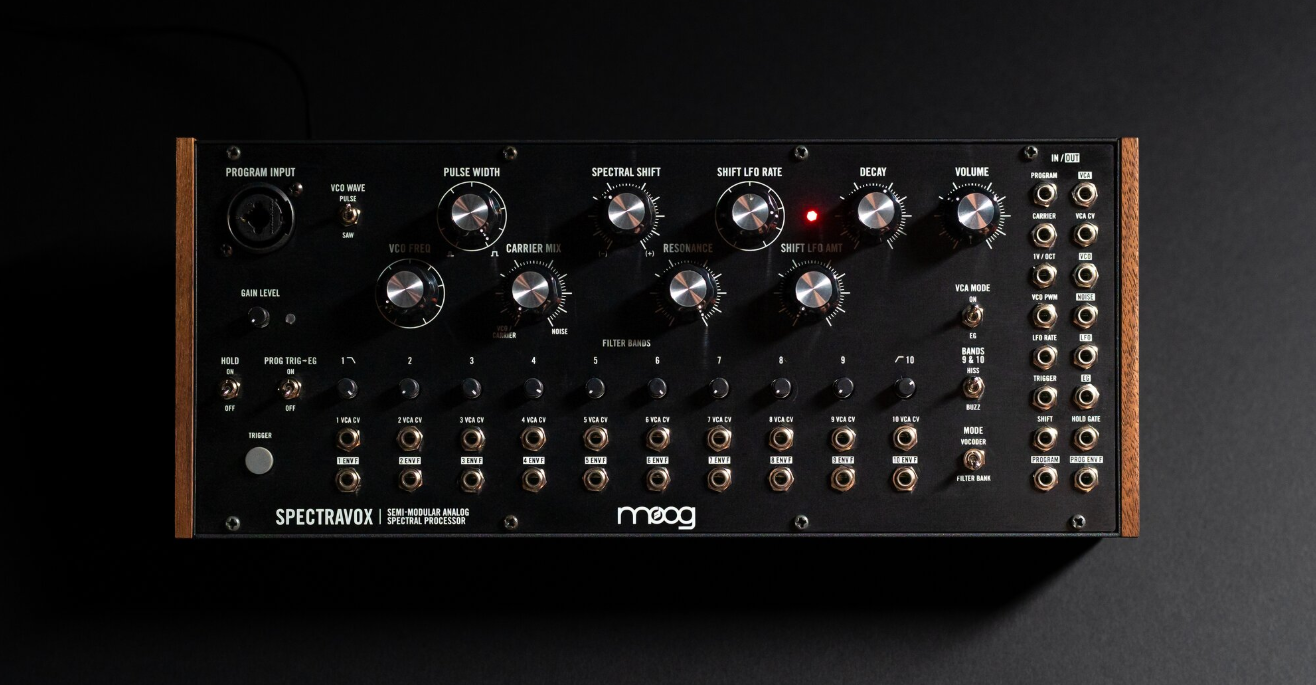
The Spectravox uses a distinctive approach to filtering. Instead of relying on a single filter cutoff like most Moog synthesizers, it employs a spectral shift control. To understand how this works, it helps to look at how the spectral shift interacts with the instrument’s VCAs, envelope followers, and filter bands.
TABLE OF CONTENTS
- What is a Spectral Shift?
- Signal Flow
- Voltage Controlled Filters
- Voltage Controlled Amplifier (VCA)
- Envelope Follower
- Utilizing the ENV F & VCA CV inputs/outputs
What is a Spectral Shift?
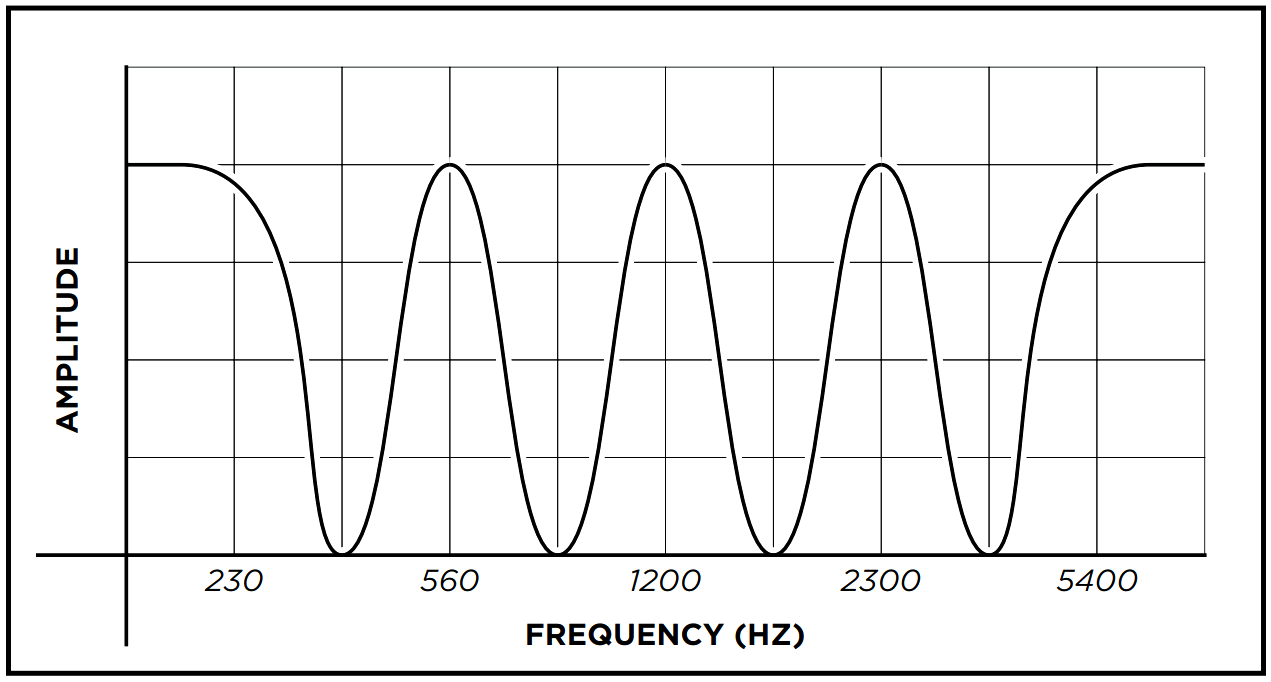
The spectral shift on the Moog Spectravox shifts the entire bank of individual 10 filters - along with their associated VCAs - up and down the frequency spectrum as a group, while a standard cutoff filter on a typical synth simply opens or closes one filter's frequency. The result is a completely different kind of motion and timbral change. The spectral shift creates motion that feels more like formant shifting, vocoder movement, or filter bank morphing.
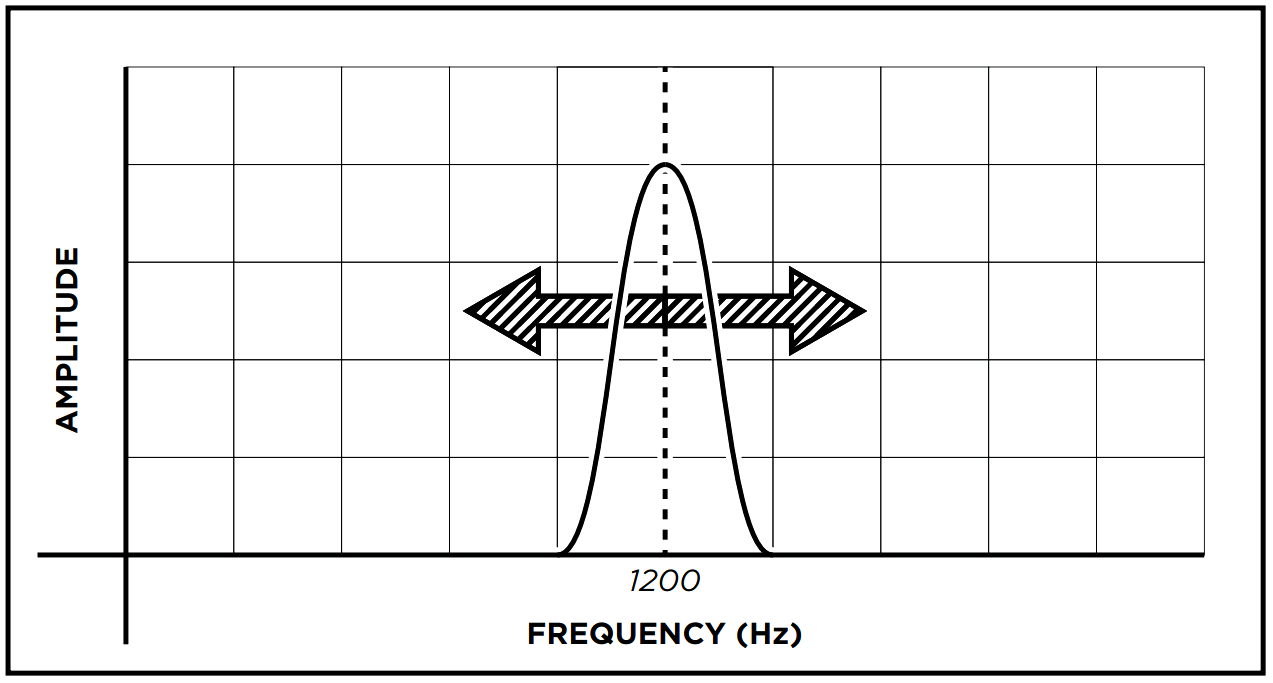
When you increase the filter’s resonance, each of the fixed frequency bands begins to self‑oscillate. This makes the individual band frequencies audible on their own. As you sweep the spectral shift, those resonant peaks slide across the spectrum, making the movement of the spectral shift even more pronounced.
Signal Flow
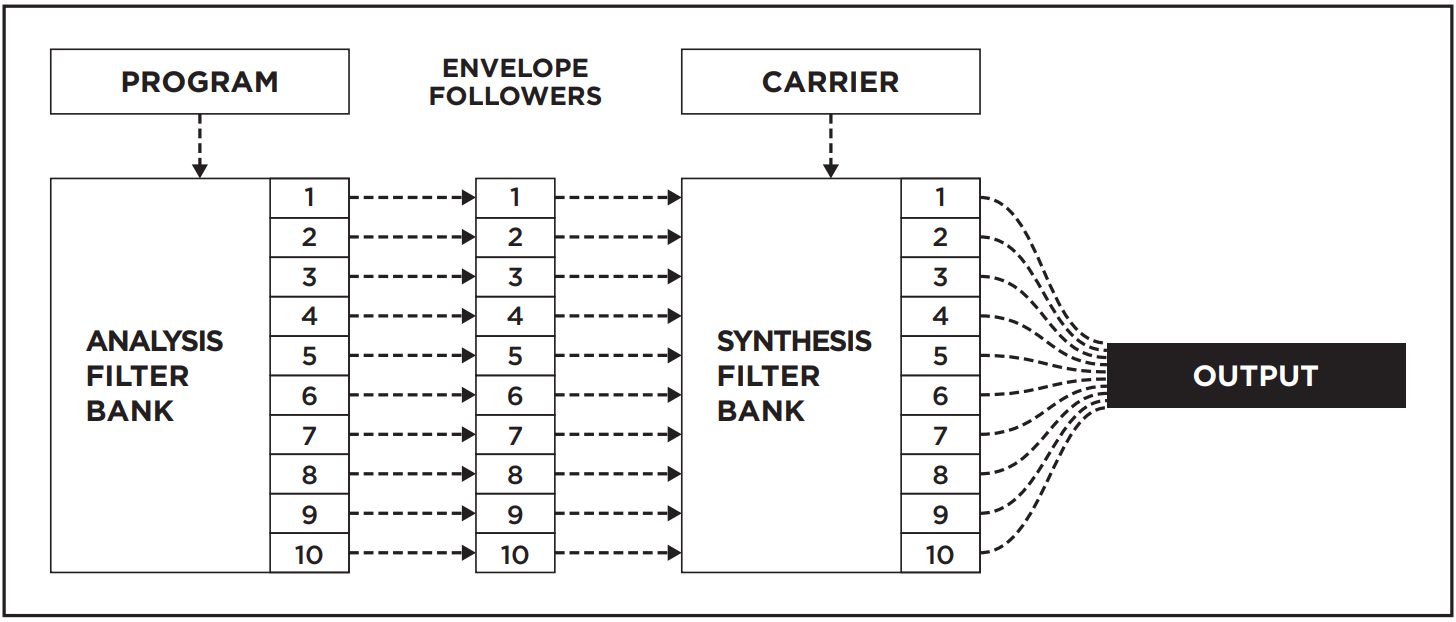
The PROGRAM is connected to the analysis filter bank, which breaks the PROGRAM sound up into 10 frequency bands. Each band is sent to an ENVELOPE FOLLOWER which converts the audio in each PROGRAM band into a slow moving control voltage. These control voltages are then used to control the level of each filter band in a synthesis filter bank. A different sound—the CARRIER—is fed through the synthesis filter bank—thus mapping the timbral characteristics of the PROGRAM onto the CARRIER.
Voltage Controlled Filters
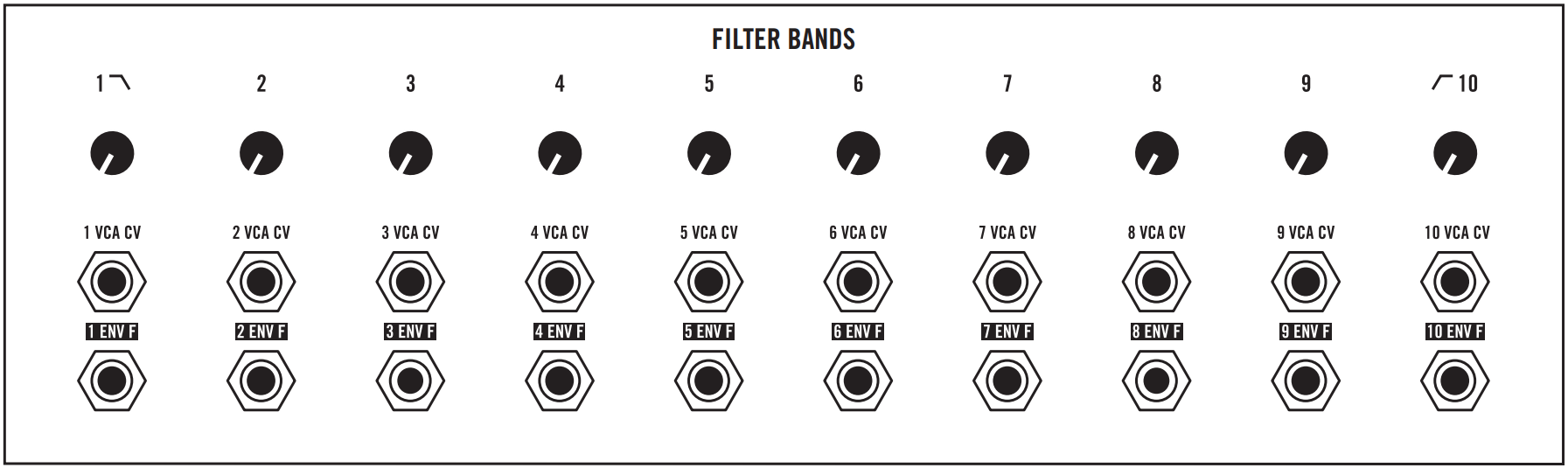
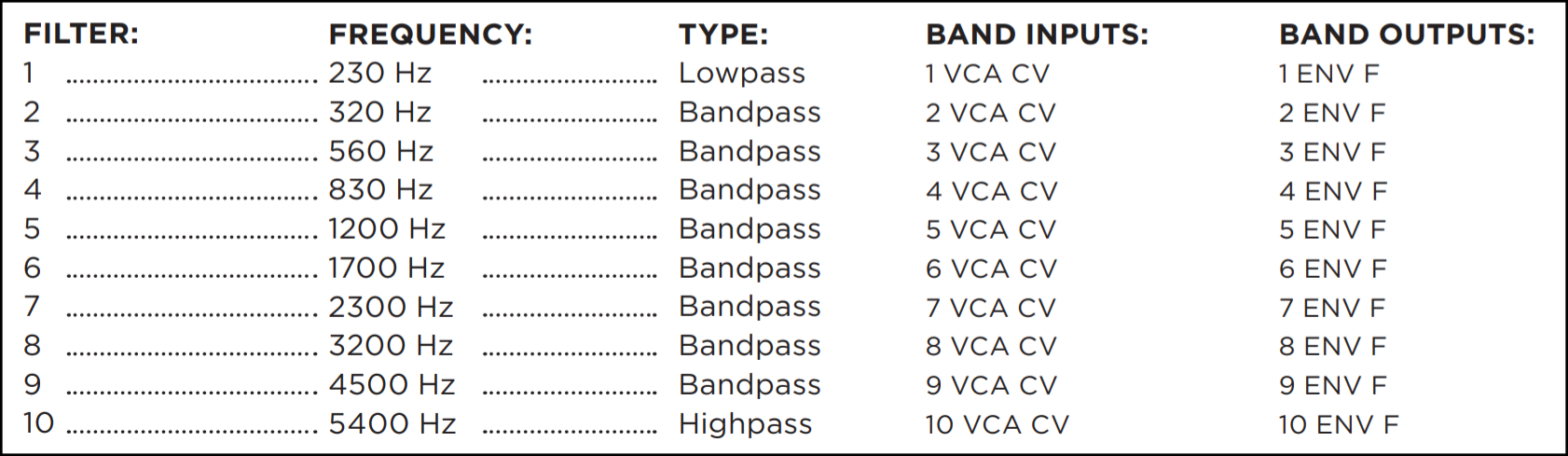
The Spectravox features 10 voltage controlled filters.
This comprises of:
- 1 Low Pass filter
- 8 Band Pass filters
- 1 High Pass filter
The frequency bands have been selected specifically as they emphasis the vocal formats of a human voice. The table below details the frequencies that each band covers, along with their associated VCA & envelope follower.

Voltage Controlled Amplifier (VCA)
There are 11 voltage controlled amplifiers on the Spectravox:
- 10 filter bank VCAs
- 1 main VCA
Each of the filter bank VCAs amplify their respective frequency band. The main VCA is found at the end of the synths signal flow, either modulated by the synths Decay envelope generator (EG), or held open via the VCA MODE.
Envelope Follower
The Spectravox has 10 envelope followers, one per analysis filter in vocoder mode. Each envelope follower outputs a control voltage proportional to the amplitude of the audio in that band.
Louder sound = Higher CV
Quieter sound = Lower CV
Utilizing the ENV F & VCA CV inputs/outputs
When you route one of these ENV F outputs into a different VCA’s CV input, you are essentially using the spectral activity of the Spectravox to control the amplitude of another signal. Each ENV F OUT is tied to a specific filter band in vocoder mode. Only when a certain frequency band is active does the external VCA open.
Was this article helpful?
That’s Great!
Thank you for your feedback
Sorry! We couldn't be helpful
Thank you for your feedback
Feedback sent
We appreciate your effort and will try to fix the article